
Best Products for the 4-Month Sleep Regression (2026)
Your baby was sleeping well, and then suddenly wasn't. The 4-month sleep regression is real, it's biological, and the right products make a genuine difference. Here's what actually helps.
Key Takeaways
- This regression is rooted in a lasting change to adult-like sleep cycles that all babies undergo though not every baby shows noticeable disruption, it is one of the most common sleep regressions parents encounter
- The Zipadee-Zip is the top swaddle-transition product for rolling babies at 4 months, enclosing hands without restraining them so it stays safe.
- White noise machines kept at a safe volume and placed 7+ feet from baby help many infants fall asleep faster and reduce night wakings.
- The same nightly routine, done consistently, is recommended by pediatricians and helps reduce sleep onset time and night wakings.
- Building consistent sleep habits and routines in early infancy supports better long-term sleep outcomes, making the right products and routines a long-term investment.
If your baby has gone from sleeping in longer stretches to waking every hour, you're not imagining things and you haven't done anything wrong. This developmental shift is a well-documented biological event, and choosing the right products now can shorten how long it disrupts your household.
What Is the 4-Month Sleep Regression?
The 4-month sleep regression is a permanent, biological shift in how your baby sleeps. Around 3 to 4 months, babies move from simple newborn sleep phases into more adult-like sleep cycles. Unlike teething or travel disruptions, this change doesn't reverse itself. It's a new normal your baby needs to learn to navigate. It typically lasts 2 to 6 weeks, but can persist longer if sleep associations aren't addressed early.
Why the Right Products Actually Matter at 4 Months
This regression is uniquely product-relevant for three reasons. First, babies are outgrowing swaddles: once a baby shows signs of rolling (typically between 3 and 4 months), it's time to transition out of a traditional swaddle. Second, the Moro (startle) reflex is still active and wakes babies as they cycle through lighter sleep stages. Third, sleep associations formed now (like needing to be rocked or fed to sleep) can become deeply entrenched and harder to break later. The right gear addresses all three issues at once, without compromising safety. Importantly, current safety guidelines advise against weighted blankets, weighted swaddles, and weighted sleepers for infants: they carry real safety risks with no proven sleep benefit.
#1 Best Swaddle Transition: Zipadee-Zip by Blooming Baby
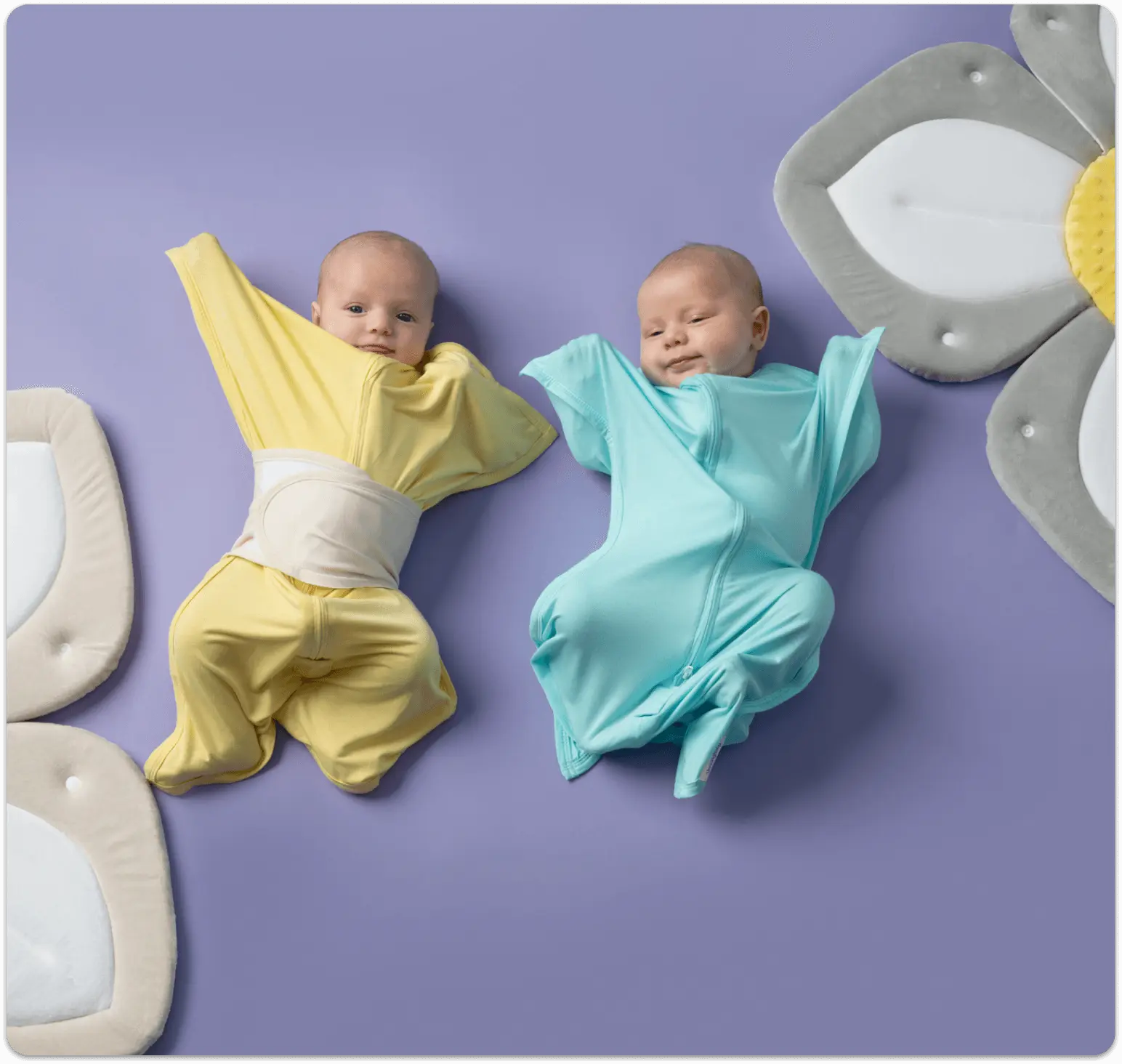
The Zipadee-Zip is the standout swaddle-transition product for 4-month-olds, particularly babies who are starting to roll. Its unique star-shaped design encloses the hands without fully restraining them, which means it addresses the Moro startle reflex while remaining safe for rolling babies, something traditional swaddles simply cannot do. It's designed in alignment with AAP safe sleep recommendations and suitable from 3 months through toddlerhood, making it useful well beyond the regression itself.
The Zipadee-Zip bridges the gap between swaddling and fully independent sleep, without going cold turkey. Instead of suddenly removing all the cozy, enclosed feeling your baby associates with sleep, it provides a gentle, womb-like sensation while allowing free movement. It comes in breathable bamboo, soft cotton, and warm fleece, so you can match the fabric to the season. For parents facing the 4-month regression right now, it's the single most versatile product you can invest in.
Loading...
$--Comparing the Top Swaddle Transition Options
Not all swaddle-transition products work the same way. Here's how the leading options compare so you can choose what fits your baby's stage:
| Product | Age Range | Safe for Rolling? | Moro Reflex Help | Key Limitation |
|---|---|---|---|---|
| Zipadee-Zip (Blooming Baby) | 3 to 24 months | Yes | Star-shaped hand enclosure without restraint | None at this stage; works from swaddle through independent sleep |
| Baby Merlin Magic Sleepsuit | 3 to 6 months | No, must stop at rolling signs | Cushioned suit muffles startle | Short-term use only; must discontinue when rolling begins |
| HALO Easy Transition SleepSack | 3 to 9 months | Yes | Flexible fit reduces Moro | Less hand enclosure than Zipadee-Zip; better for babies preferring arm freedom |
#2 For Non-Rolling Babies: Baby Merlin Magic Sleepsuit
The Baby Merlin Magic Sleepsuit is an option for non-rolling babies aged 3 to 6 months. Its cushioned design muffles the startle reflex and helps ease the transition away from a traditional swaddle. The critical limitation: it must be discontinued the moment your baby shows any signs of rolling. Since many babies begin rolling right around 4 months, this makes it a shorter-term solution. If your baby is already showing rolling signs, move directly to the Zipadee-Zip instead.
#3 Flexible Fit: HALO Easy Transition SleepSack
The HALO Easy Transition SleepSack is appropriate once rolling begins, for babies aged 3 to 9 months and offers a more flexible fit that still helps reduce the Moro reflex. It's widely available and a solid choice for babies who resist hand enclosure. That said, it provides less of the cozy, enclosed sensation that helps babies who were strong swaddle fans, so for those little ones, the Zipadee-Zip's star-shaped design is typically the better fit.
Learn More
#4 Best White Noise Machine for Sleep Regression
White noise works. Babies exposed to steady background sound fall asleep faster, stay asleep through lighter sleep cycles, and cry less during wake-ups. For the 4-month regression, where light sleep stages are suddenly more frequent, white noise acts as an auditory anchor that helps babies transition between cycles without fully waking.
Popular options include the LectroFan (simple, effective, no light distraction), the Hatch Rest (doubles as a nightlight and app-controlled), and the Marpac Dohm (mechanical fan-based sound, preferred by many parents for its natural tone). Whichever you choose, follow the AAP safety rule: place the machine at least 7 feet from your baby's sleep space and keep volume at or below 50 decibels, roughly as loud as a quiet dishwasher.
#5 Best Bedtime Routine Tools: Projectors, Nightlights and Bath Products
A consistent bedtime routine is one of the most powerful tools you have. A predictable wind-down routine helps babies fall asleep faster, wake less at night, and get more total sleep. Pediatricians recommend building one early. The right products make that routine easier to stick to.
Here are the routine-supporting products worth adding at 4 months:
- Gentle baby wash and bath products: A warm bath is one of the most reliable sleep cues you can build. Look for fragrance-free, skin-safe formulas free from BPA, PVC, and phthalates. Blooming Baby carries bath essentials designed with this exact pre-bed ritual in mind.
- Soft-glow nightlights or star projectors: Dim, warm-toned light signals wind-down time without stimulating your baby. Star projectors add a gentle visual cue that becomes part of the sleep association, in a helpful way.
- Simple routine trackers: A basic log (paper or app) helps you spot patterns in wake windows and nap timing, which is especially useful during the regression when schedules feel chaotic.
Products to Skip (and Why)
Some products are heavily marketed for sleep but carry real safety concerns. Knowing what to skip is just as important as knowing what to buy.
- Weighted swaddles, blankets, and sleepers: The AAP advises against all weighted sleep products for infants. They increase suffocation and overheating risk with no proven sleep benefit.
- Incline sleepers and wedges: Any product that props baby at an angle during sleep is not considered safe per current guidelines. Babies should sleep on a flat, firm surface.
- Traditional swaddles for rolling babies: Once rolling signs appear, a wrapped swaddle becomes a suffocation hazard. Transition to a product like the Zipadee-Zip immediately.
- Devices that rock or vibrate all night: Motion-dependent sleep can deepen the association between movement and falling asleep, making independent sleep harder to establish later.
Putting It All Together
The products above work best when combined into a consistent sequence. Here's a simple 5-step evening routine that brings them all together:
- Warm bath: Start with a gentle bath using a calming baby wash. The temperature drop afterward naturally signals sleepiness.
- Feed: Offer a full feed after the bath, not right before placing baby down, to avoid nursing or bottle-feeding becoming the primary sleep association.
- Dim lights and white noise on: Switch to your soft-glow nightlight or star projector and turn on the white noise machine (7+ feet away, under 50 dB). These cues tell your baby the environment has shifted to sleep mode.
- Zipadee-Zip on: Zip baby into the Zipadee-Zip. The enclosed, star-shaped fit recreates the cozy feeling of the swaddle while keeping hands free for rolling safety.
- Drowsy but awake placement: The AAP recommends placing baby in their sleep space while drowsy but still awake at 4 months. This is the key to building self-soothing skills that reduce night wakings over time.
Consistency is what makes this work. Consistent sleep habits established early pay off in better long-term sleep for your family. What you do in the next few weeks is a genuine long-term investment.