
Baby Bath Essentials: What You Really Need
A safety-first guide to the must-have products and expert-backed tips for calm, confident bath time from day one.
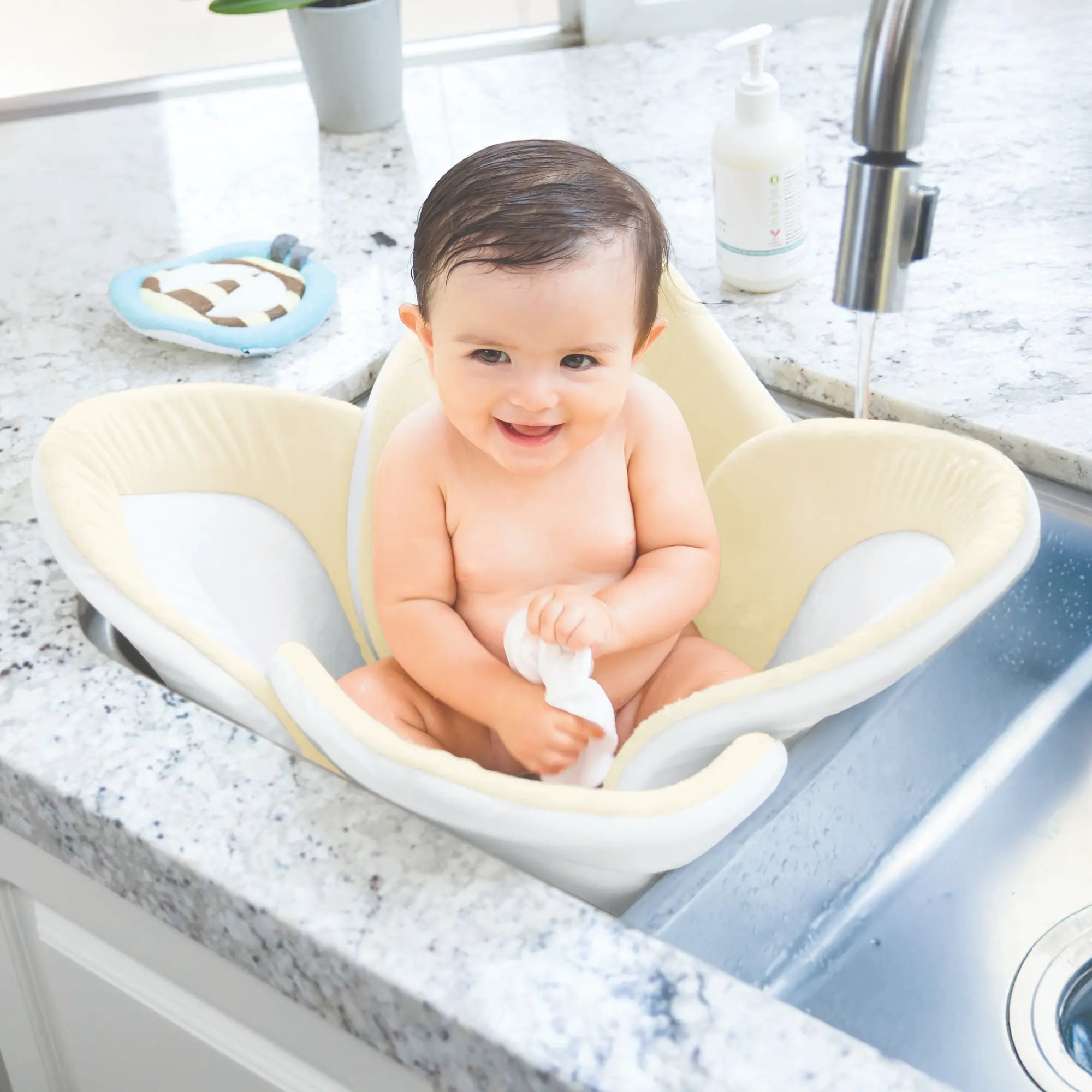
For a safe and stress-free baby bath, you need six core essentials: a baby bathing vessel, a gentle fragrance-free cleanser, a bath thermometer, soft washcloths, a hooded towel, and a non-slip mat. These items, paired with consistent safety practices, are all you need to build a calm bath routine from the very first wash.
Loading...
$--When Should You Start Bathing Your Newborn?
Hold off on that first bath. The World Health Organization recommends waiting at least 24 hours after birth before your baby's first bath, or a minimum of six hours if a full day isn't possible. Delaying that
first bath helps protect your baby's natural skin barrier and supports early breastfeeding.
Until the umbilical cord stump falls off, stick to sponge baths only. Keeping the stump dry reduces infection risk. Once it has healed, you can move to a baby tub.
Bathing too frequently strips away the protective lipids that keep skin moisturized, removes beneficial bacteria, and can trigger eczema flare-ups. Spot-clean the face, neck folds, and diaper area daily in between.
What Is the Safest Way to Bathe a Baby?
Bath time safety is non-negotiable. A baby can drown in as little as 2 inches of water in just seconds, so never leave your baby unattended in or near water, not even for a moment.
The AAP advises keeping your faucet's maximum temperature at or below 120 degrees Fahrenheit to prevent scalding. Always test with a bath thermometer or your elbow, not your hand, which is less sensitive to heat.
What Products Do You Need for a Safe Baby Bath?
Your baby bath checklist does not need to be long, just purposeful. Here is what each category should include and why it matters.
| Essential | What to Look For | Why It Matters |
|---|---|---|
| Baby Bathing Vessel | Non-slip base, newborn sling or inclined insert | Standard tubs and sinks pose drowning and injury risks. Baby tubs are designed with infant-safe inclines and sizing. |
| Gentle Cleanser | Fragrance-free, tear-free, paraben-free, sulfate-free | Newborn skin is highly absorbent and reactive to harsh additives. |
| Bath Thermometer | Digital or color-change; tubs with built-in indicators preferred | Tubs with integrated temperature indicators provide a more reliable safety check than testing by touch alone, reducing the risk of accidental scalding from water that is too hot. |
| Soft Washcloths | Muslin or organic cotton; 6+ pack recommended | Multi-use for face, body, and spot cleaning between baths. Gentle on delicate newborn skin. |
| Hooded Towels | Organic cotton, bamboo, or muslin; minimum 2-3 | Keeps baby warm quickly after bathing. Soft, breathable fabrics suit sensitive skin. |
| Non-Slip Mat | Fits tub or bathroom floor surface | Reduces slip risk for caregiver and baby during and after the bath. |
How Do You Choose Safe Baby Skincare for Bath Time?
Ingredient selection matters more for babies than for adults. Newborn skin is up to 30% thinner than adult skin and more absorbent, which means potentially harmful substances are absorbed more readily. This makes the choice of cleanser and moisturizer genuinely consequential.
Ingredients to avoid include synthetic fragrances, parabens, sulfates, and essential oils. Essential oils are particularly worth flagging: they are not recommended for babies under 12 months, even when diluted, because of increased toxicity risk and the potential for allergic sensitization. Natural alternatives like aloe vera, chamomile, and shea butter are widely preferred by parents seeking gentle, skin-safe formulations for their newborns.
After bath, apply moisturizer promptly. The 'Soak and Seal' method, applying moisturizer within three minutes of bathing while skin is still damp - locks in maximum hydration and is especially important for babies with dry or eczema-prone skin. Blooming Baby's bath essentials are curated with these evidence-backed standards in mind, prioritizing gentle, skin-safe formulations.
Can Bath Time Help Baby Sleep Better?
Yes, timing matters. A warm bath 60 to 90 minutes before bedtime can help your baby wind down. The warmth brings blood to the surface, which gently cools their core temperature afterward, a natural signal that
tells the body it's time to sleep. It's the reason the "bath before bed" routine works so well for so many families.
The benefits extend well beyond sleep. Consistent bath routines have been linked to a range of positive developmental outcomes including language development, emotional and behavioral regulation, parent-child attachment, and stronger family functioning. Bath time is not just about cleanliness, it is a daily opportunity to connect, soothe, and build the kind of predictable routine that helps babies (and parents) feel secure.
The ColorBloom Baby Bath Seat is designed around exactly these principles: a stable, ergonomic base that keeps hands free for washing, paired with a color-change temperature indicator so you can check water safety at a glance. It's a simple upgrade that makes bath time feel less like a balancing act and more like the connecting routine it's meant to be.